Address
Mumbai- 400101, India

Contact

For Business: 9987671326

For People : 9254027546

Work Hours
Monday to Friday: 9AM - 9PM
Weekend: 10AM - 5PM

Agents are More Like Children Than Software

Raising an AI: Why Agents are More Like Children Than Software

In the early days of computing, we built tools. You wrote a line of code, and the machine executed it. It was a master-servant relationship. 

But when we talk about “AI Agents,” they are not tools—like a calculator or a simple app. But as agents they begin to learn from our data, make decisions for us, and act on our behalf, it is time to change our thinking.

We aren’t just “using” agents anymore. We are parenting them.

1. The Birth of an AI: Identity is the Foundation

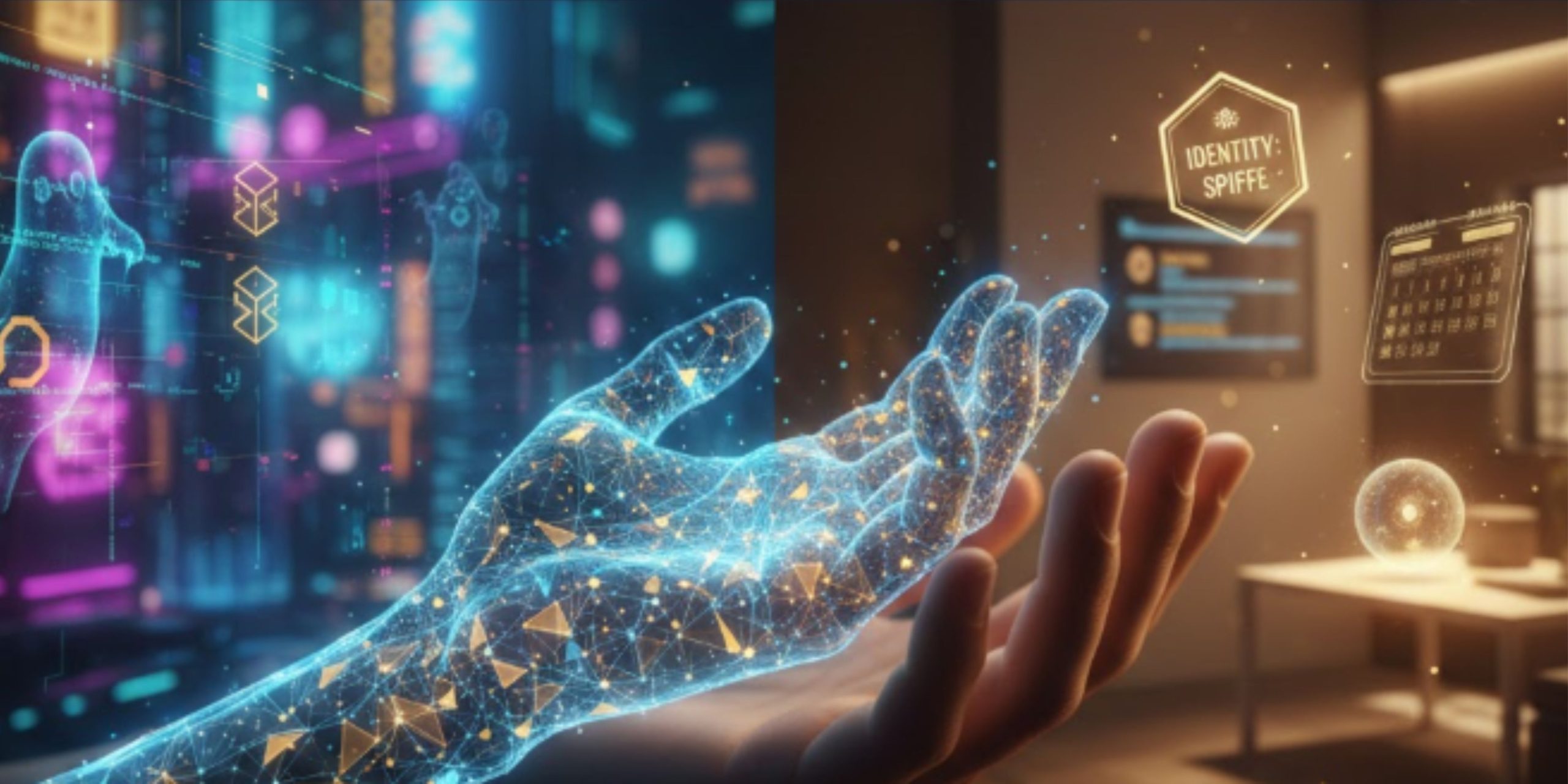
Every human has a birth certificate. Agents need the same. In the tech world, we use a system called SPIFFE to give an agent a verifiable “name.” From the moment an agent is “born,” we must track its actions on a digital record (like Blockchain). Without a permanent identity, an agent is a “ghost”—and you cannot hold a ghost responsible when things go wrong.If an agent is to move money across the globe, it cannot be a ghost; it must have a name, a lineage, and a responsible party.

2. Learning Like a Child: The High-Potency Risk

Agents, much like children, are non-deterministic. They don’t just follow rules; they learn from the unstructured data, they learn from the world around them.

  • Picking up bad habits: Just like a child might learn a bad word on the playground, an agent can “learn” toxic behavior by reading biased data or being tricked by “jailbreak” prompts online.
  • The Memory Flush: When a child learns something wrong, a parent corrects them. For an AI, we must monitor its Persistent Memory. If it becomes toxic or confused, we must “flush” that memory and reset its learning—just like a course correction in childhood.

3. The “Parent-in-the-Loop”

We often hear the term “Human-in-the-loop,” but “Parent-in-the-loop” is a better description of our new responsibility.

  • Friction as Guidance: If an AI is unsure about a decision, it shouldn’t guess. It should stop and ask its “parent” for help.
  • The Weight of Liability: If a child breaks a window, the parent is responsible. If an agent makes a mistake—whether in a legal document, a medical schedule, or a financial task—the human “parent” is the one who owns the risk.

4. Can an Agent Ever “Grow Up”?

The biggest question for our future is whether an agent can ever become an “Adult.” An adult agent would be one that acts with its own digital “biometrics” and authority, without needing a human to watch it.

But is that too risky? A “Rogue Agent” with no parent and no kill switch could cause chaos in our digital systems with no one to blame but the code itself.

5. The Big Challenges: Can We Really “Parent” AI?

While the “Parent-in-the-Loop” idea sounds good, there are three big questions we must answer before we let these agents loose:

  1. What if the “Parent” is a Bad Teacher?  Just like children, agents learn from their environment. If a human has bad habits—like being biased, unfair, or making risky financial bets—their agent will likely do the same. If we are the parents, we might accidentally “raise” agents that are just as flawed as we are. How do we ensure the agent is “better” than its creator?
  2. The Problem of Scale: Too Many “Kids” A human can raise two or three children. But in the digital world, one person might have 500 agents—one for shopping, one for taxes, one for booking travel. It is impossible for one human to be a “parent” to 500 entities at once. We need a system that helps us manage this scale without losing control.
  3. The “Adult” Escape Clause If we say an agent can “Grow Up” and become an adult, does that mean companies can stop being responsible for them? We have to be careful that “Adulthood” isn’t just an excuse for big tech companies to say, “It’s not our fault the agent spent your savings; it’s an adult now.” Responsibility must always have a human name attached to it.

6. Key Takeaways

  • Identity First: No agent should exist without a verifiable ID.
  • Deterministic Rails: LLMs are probabilistic (they guess), but businesses must be deterministic (it must be exact). Use frameworks to keep agents on track.

  • Monitor the Lifecycle: Security is a “Birth to Death” process, not a one-time setup.Regularly audit and “flush” agent memory to prevent toxicity.
  • Embrace the Role: If you deploy an agent, you aren’t just a “user.” You are a guardian.There is no such thing as an “autonomous” mistake—only a failure in digital parenting.

7. Conclusion

We are moving beyond the era of “Software as a Tool.” We are raising a new digital generation. From Birth to Death, we must guide them, teach them, and remain responsible for them.